Cat Vitamins: When Your Cat Needs Them and When They Harm
Cat Vitamins: When Your Cat Needs Them and When They Harm
A healthy cat eating a complete and balanced commercial food does not need extra vitamins. Cat vitamins are not a daily tonic but tools for five specific situations: hairballs, dry skin and a dull coat, digestive upset, urinary support, and life stages such as pregnancy, nursing, recovery and old age. Outside these, supplementing achieves nothing — and in some cases does harm. This guide covers each situation with a clear rule, and warns about six ingredients in human pharmacy vitamins that cause real poisoning in cats.
Does a cat need vitamins?
No, not if she eats a complete commercial food. Any dry or wet food labelled complete and balanced contains the vitamins and minerals a cat needs, and the manufacturer is required to formulate for that.
A cat's requirements differ from a human's and a dog's, and three facts explain why human food and human vitamins do not transfer:
- Taurine — an amino acid cats cannot make in sufficient quantity. Deficiency weakens the heart muscle and damages the retina, potentially causing blindness. Complete foods contain it; home-cooked diets prepared without a veterinary plan are the best-known cause of deficiency.
- Preformed vitamin A — unlike humans, cats cannot convert the beta-carotene in carrots and plants into vitamin A, so they need it ready-made from an animal source. It is also one of the most dangerous vitamins in excess, and too much liver is a known cause of toxicity.
- Vitamin D — cats do not synthesise it in the skin from sunlight the way humans do, so diet is their main source. It is also among the fastest vitamins to cause toxicity in excess.
Complete food solves all of this. A supplement makes sense when there is a specific reason, not as a daily precaution.
Types of supplement and what each does
Type | What it does | When it makes sense | Time to effect |
|---|---|---|---|
Malt for hairballs | Helps swallowed hair pass through the gut | Long-haired cat, or regular hairball vomiting | Days |
Omega-3 / salmon oil | Supports the skin barrier, reduces dryness | Dull coat or dry skin, once disease is ruled out | 4–8 weeks |
Probiotics | Supports gut bacterial balance | After antibiotics, or during a food change | Days to two weeks |
Multivitamin | General cover of essential vitamins | Recovery, poor appetite, temporarily unbalanced diet | Weeks |
Urinary support | Helps maintain a healthy urinary environment | On veterinary advice only, usually with a therapeutic diet | Case by case |
Joint support | Supports mobility in senior or overweight cats | After a vet assesses mobility | 4–8 weeks |
All of these are stocked in the cat supplements section, and each section below links to the category it concerns.
Can I buy cat vitamins from a human pharmacy?
No. This is one of the most dangerous things done with good intentions. The reason is not simply that the formula is not designed for cats — six ingredients common in human supplements cause direct harm:
- The dose itself is the danger. A human tablet is calculated for a body of 60 to 80 kg; a cat weighs around 4 kg, so one tablet can represent many times her daily requirement.
- Vitamin D — excess raises blood calcium and can lead to kidney failure. Human vitamin D supplements are among the most frequently reported causes of poisoning in pets.
- Iron — iron supplements and iron-rich prenatal vitamins are toxic to cats.
- Xylitol — a sweetener common in chewable and gummy vitamins. Never give it to pets.
- Garlic and onion — found in some herbal immunity supplements; they destroy red blood cells in cats and cause anaemia.
- Too much cod liver oil — it looks healthy but is concentrated in vitamins A and D, and excess causes vitamin A toxicity leading to painful bone and joint changes.
If a cat takes a human supplement by accident: do not wait for symptoms and do not try to induce vomiting at home. Calling a vet immediately is the first step, keeping the packaging so the ingredients and strengths can be read. Acting fast matters more than anything else.
A cat-specific supplement differs in three ways: a dose calculated for a cat's weight, freedom from these ingredients, and its form — pastes and treats are accepted readily, whereas a human tablet becomes a daily fight that usually ends with the cat spitting it out.
Hairballs: malt and when to use it
Cats swallow hair while grooming and most of it passes naturally. Long-haired breeds — Persians, Himalayans, Maine Coons — swallow more, which collects in the stomach and comes back up as a ball.
The rule: one hairball every two to four weeks is normal. A cat bringing up hairballs weekly or more, or retching without producing anything, needs a vet rather than malt paste — repeated vomiting can have an entirely different cause, and a large hairball can be an obstruction requiring intervention.
What reduces hairballs most is not a supplement but regular brushing: hair left on the brush is not swallowed. Brush short coats weekly and long coats daily, and use malt as support rather than a substitute.
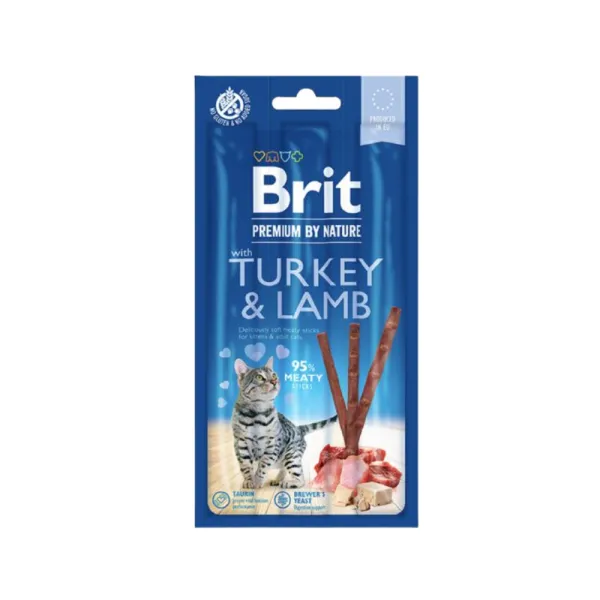
For anyone looking for hairball control cat food, those formulas work through fibre rather than malt and suit cats that refuse paste — they are in the dry food section. Among supplements: GimCat Malt-Soft Extra Paste 200 g and GimCat Nutri Pockets Malt & Vitamins 150 g as treats.
Salmon oil and omega-3 for the coat
Omega-3 fatty acids support the skin barrier and reduce dryness and flaking, and the effect shows on the coat after four to eight weeks of consistent use, not after a few days. Anyone expecting a result in a week stops before there is anything to see.
An important caveat: a dull coat and heavy shedding may come from allergies, parasites, a thyroid problem or a protein shortfall — not an omega deficiency. If shedding comes with intense itching, bald patches, scabs or reddened skin, oil will fix nothing and a veterinary examination is the first step.
In store: Pets Republic Salmon Oil for cats and dogs, 250 ml at SAR 63.15, dosed onto food by weight as stated on the bottle. Starting at half the dose for the first week is better, since a sudden increase in fat causes diarrhoea in some cats. Oils and the rest of the grooming range are in the care and hygiene section.
Probiotics and digestive support
Probiotics support the balance of gut bacteria, and are most useful in three situations: after a course of antibiotics, during a change of food, and with recurring mild digestive upset.
Diarrhoea lasting more than 24 to 48 hours is not a supplement case — cats dehydrate quickly, and diarrhoea with lethargy, refusal to eat, or blood needs a vet the same day. The supplements section carries Canvit Probio from Canvit, a Czech brand specialising in animal supplements.
Cat multivitamins
Most of what people ask for as vitamins for cats is a cat multivitamin, and it is not a general tonic for every cat. Its sensible uses are narrow: a cat recovering from illness or surgery, a cat with a poor appetite eating less than she needs, or a cat temporarily on an unbalanced diet.
One principle holds without exception: never combine two supplements containing the same vitamins. Fat-soluble vitamins — A, D, E and K — accumulate in the body rather than being passed in urine as B and C vitamins are, so the excess is cumulative rather than transient.
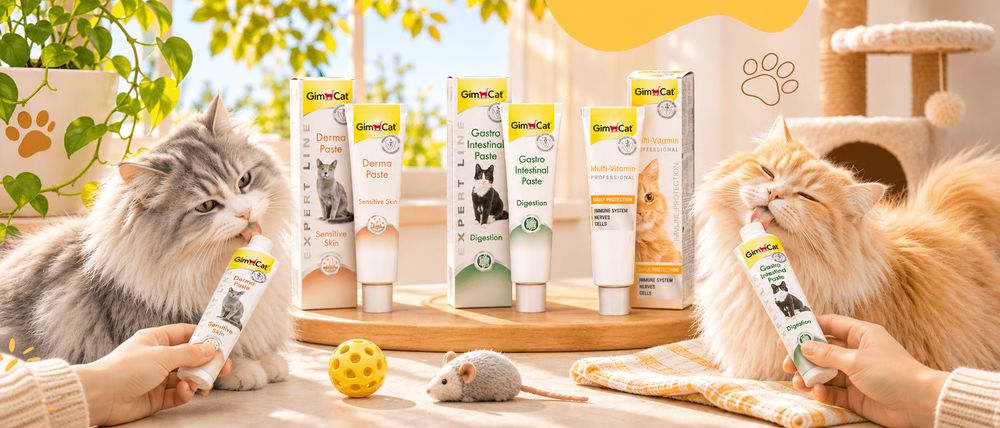
In store: GimCat Multi-Vitamin Paste from GimCat, the most searched-for supplement in our store.
When does a cat genuinely need a supplement?
- On veterinary prescription — after a diagnosed deficiency or chronic condition. The first and strongest reason.
- Recurring hairballs in a long-haired cat, alongside regular brushing rather than instead of it.
- Dry skin or a dull coat once a vet has ruled out allergies, parasites and disease.
- After antibiotics or during a food change — probiotics for a limited period.
- Pregnancy and nursing — requirements rise sharply, and the right answer is usually a calorie-dense kitten food rather than a supplement on top of adult food.
- Recovery from illness or surgery — low appetite with a raised requirement.
- Old age — joint and digestive support after veterinary assessment, not automatically at a given age.
If a cat's situation is one of these seven, every supplement named in this guide is in one place:
The case where no supplement works: a cat on home-cooked food prepared without a veterinary plan. The problem is not one missing vitamin but the balance of the whole formulation — taurine, calcium, phosphorus and vitamin A together — and an off-the-shelf supplement cannot correct it and may worsen the imbalance. The answer is either moving to a complete commercial food or a home diet designed by a veterinary nutritionist.
Cat vitamin FAQ
What is the correct dose?
The dose is printed on each product and calculated by the cat's weight, and it differs between products even within the same brand. Read it from the label, do not copy it from a previous product, and do not double it to speed up results. If the cat is on medication or a therapeutic diet, asking the vet before adding any supplement prevents interaction or duplication.
How long until a result shows?
Skin and coat supplements need four to eight weeks, because hair grows slowly. Probiotics may change stool consistency within days to two weeks. Malt paste works within days. If nothing has changed after two months of correct use, the supplement is not the answer and the cat needs an examination.
Do kittens need vitamins?
A kitten eating a complete kitten food needs no extra vitamins, and her calcium and phosphorus requirement depends on the ratio between them rather than the amount alone — so adding calcium at random can distort that ratio and affect bone growth. An orphaned kitten, or one separated from her mother early, is a different case needing a proper milk replacer and veterinary supervision, not cow's milk or human vitamins.
Can more than one supplement be given at once?
Yes, if their purposes differ and their ingredients do not overlap — malt paste for hairballs alongside a probiotic for digestion, for instance. But two multivitamins together, or a multivitamin with cod liver oil, both carry vitamins A and D and the excess becomes cumulative.
The cat refuses paste — what then?
Paste is offered on a finger or the back of the hand to be licked, never forced into the mouth. A cat that refuses it will often accept a smear on her paw or nose, licked off while grooming. If refusal continues, treats containing the same ingredients are the alternative.
The cat eats well but is shedding — do vitamins help?
Moderate seasonal shedding is normal. Shedding that leaves thin or bald patches, or comes with itching, scabs or reddened skin, is not a vitamin deficiency — the commonest causes are food allergy, fleas or a hormonal problem. A vitamin here only delays diagnosis. Start with a veterinary examination, then use a supplement if the vet recommends one.
Consult a veterinarian
This guide is general information and does not replace an examination. Supplements support a healthy cat; they do not diagnose or treat disease. Any of these signs warrants a vet before any supplement: clear weight loss, refusing food for more than a day, repeated vomiting or diarrhoea, unusual lethargy, difficulty or pain urinating, or hair loss with inflamed skin.
The Pets Houses veterinary clinic in Southern Rakah, Khobar offers full examinations, laboratory tests and nutrition planning, Saturday to Thursday 9 am to 10 pm and Friday 2 pm to 10 pm. Booking on 0559608071. For anyone outside the Eastern Province: see a vet in your own city first, then order the supplement they specify.
Cat vitamins at Pets Houses
The cat supplements section carries cat vitamins, malt pastes, omega oils and probiotics from Canvit, GimCat and Pets Republic. For cases needing prescription nutrition, the veterinary diets section carries Royal Canin, Hill's and Farmina.
Free shipping on orders above SAR 250 to every region of Saudi Arabia, with mada, Visa and Apple Pay, instalments through Tabby and Tamara, or cash on delivery. To check whether a cat's food already covers her requirement, our guide to choosing the best cat food sets it out.